Why Azure Integrations Matter
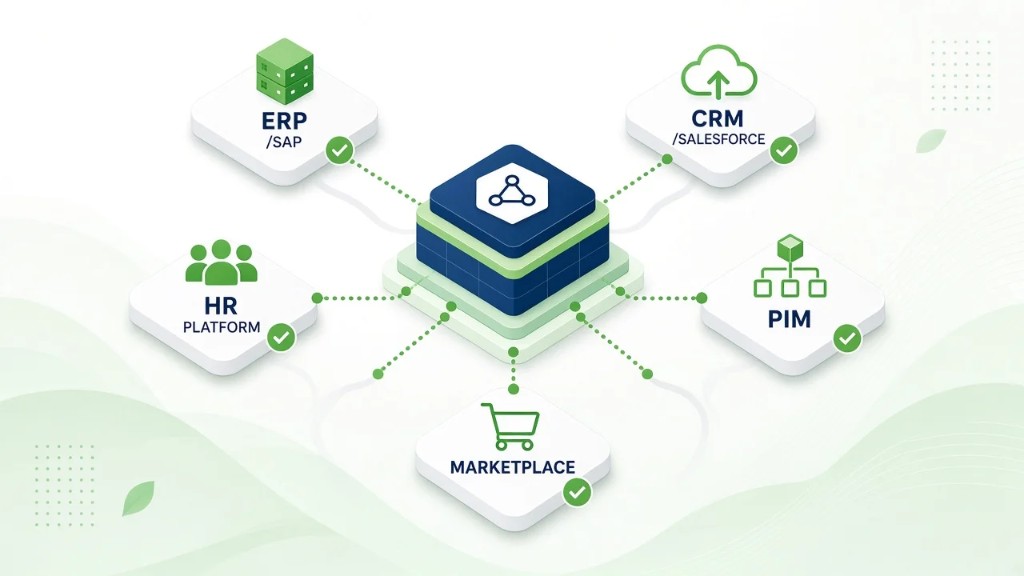
Enterprises run on a patchwork of ERP, CRM, HR, PIM, marketplaces, and SaaS tools. When those systems stay connected by brittle point-to-point scripts and manual file drops, teams face delayed updates, incomplete records, and failures that are hard to trace.
Azure Integrations treat connectivity as a governed capability — not plumbing. DesIDEA builds orchestrated flows with mapping, field validation, retries, and observability so healthy traffic keeps moving when partners or schemas change.
System-to-system sync
One-way and bi-directional flows across PIM, Salesforce, HRIS, SAP, and commerce partners.
Validate before write
Stop incomplete or malformed records at the edge without blocking the entire batch.
Resilient by design
Retries, dead-letter isolation, and clear reprocessing paths for real production failures.
Ops-ready monitoring
Run history, alerting, and auditability so overnight surprises become actionable events.
What a Modern Azure Integration Layer Includes
- Azure Logic Apps — Orchestrate business processes across on-premises and cloud systems.
- API Management — Secure exposure, throttling, and monitoring of enterprise APIs.
- Service Bus / Event-driven patterns — Decouple producers and consumers under volume spikes.
- SaaS & ERP connectors — Salesforce, Dayforce, Concur, SAP, marketplaces, and custom APIs.
- Identity & secrets — Entra ID patterns and Key Vault — never hard-coded credentials.
- Supportability — Structured logging, failed-record isolation, and documented runbooks.
Design for the failures that happen in production — partner payload changes, offline systems, and partial batches — so integrations keep working when conditions are imperfect.
Patterns DesIDEA Delivers
- PIM → CRM product sync — Transformation, validation, and failed-record isolation.
- HRIS event fan-out — Employee events distributed to travel, expense, recruiting, and SAP targets.
- Marketplace ↔ ERP — Bi-directional order and shipment synchronization.
- B2B / partner onboarding — Reusable extraction and mapping patterns per downstream system.
How DesIDEA Delivers
Discover
Map systems, contracts, volumes, failure modes, and ownership boundaries.
Architect
Choose orchestration, messaging, and API patterns aligned to SLAs and supportability.
Integrate
Implement mapping, validation, retries, and monitoring with production-grade error handling.
Operate
Hand over runbooks, alerting, and reusable patterns for the next partner or system.
Outcomes Teams Expect
- Automated product, employee, order, and shipment flows across critical systems
- Reduced manual export/import and duplicate data entry
- Improved auditability with structured logging and exception isolation
- Reusable Azure integration patterns for future systems and partners